Design of a Lower Limb Assisted Walking Device Based on Machine Vision
Keywords:
Machine Vision, Lower Limb Assisted Walking Device, Stair Recognition, Edge DetectionAbstract
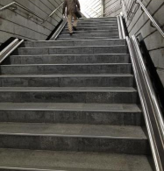
Aiming at the problem that elderly people and patients with leg diseases are prone to falls in stair scenarios, this paper proposes a stair recognition method based on traditional computer vision, deployed on the Canaan Technology CanMV K230 embedded platform. The method first uses the Canny operator to extract edges from grayscale images, then employs the Standard Hough Transform to detect line segments from the edge map, clusters the inclination angles of each line segment, and determines whether there exist multiple groups of approximately parallel stair edge structures, thereby identifying stair scenarios and transmitting the results via UART to the STM32 lower computer to control the assistance level of the auxiliary motor. Experimental results show that the method achieves a recognition rate of over 90% in typical indoor and outdoor stair scenarios, with a running frame rate of no less than 20 FPS. It exhibits high real-time performance and low system overhead, requires no large-scale annotation data or deep learning training, and is suitable for deployment on resource-constrained embedded platforms, effectively improving the stability and safety of elderly walking assist devices in complex scenarios.
References
Zhang Hongliang.(2021). Design and Research of Exoskeleton-Assisted Walking Device for the Elderly [D]. Master's thesis.Nanjing University of Science and Technology,NanJing,China.
Holton C Gwaltney, Joseph W Harrington, Jose G Anguiano Hernandez, etc.(2024)[J]. Plantar Kinetics During Wheeled Knee Walker Use Compared to Different Assistive Walking Devices in Persons With Type 2 Diabetes Mellitus. Foot & ankle orthopaedics,24730114241235911.
Chen Wanqi, Wu Qingxue, Li Yanying. Design of a Clinical Walking Assist Device [J]. China Science and Technology Information, 2025(11): 88-90.
THONNY. Thonny Python IDE for beginners [EB/OL]. https://thonny.org/, 2023.
Chen Hongyu. Structural Optimization Design of Wearable Lower Limb Rehabilitation Assisted Walking Device [J]. China Equipment Engineering, 2020, (7): 133-134.
Xiao Dan. Research on Innovative Design of Walking Assist Device for Leg Patients Based on Situational Context [D]. Chang'an University, 2019.
Zeng Jun. Research on Image Edge Detection Technology and Its Applications [D]. Huazhong University of Science and Technology, 2011.
Kang Mu. Research on Several Key Algorithms in Image Processing [D]. Xidian University, 2009.
Dong Hongyan. Research on Several Technologies of Edge Detection [D]. National University of Defense Technology, 2008.
Chen Peijun, Wu Tiejun. Detection of Impurities in Tea Using Hough Line Transform After Shadow Removal [J]. Mechanical Engineering & Automation, 2014, (5): 63-65.
Gu Siyan. Research on Line Detection Technology and Application of Machine Vision [D]. Guangdong University of Technology, 2011.
Zhou Xiaoming. Research on Real-Time Recognition Algorithm of Dynamic Targets Based on Line Detection [D]. Huazhong University of Science and Technology, 2009.
Chutatape O, Guo L. A modified Hough transform for line detection and its performance [J]. Pattern Recognition, 1999, 32(2): 181-192. DOI: 10.1016/S0031-3203(98)00140-X.
Palmer P, Kittler J, Petrou M. An Optimizing Line Finder Using a Hough Transform Algorithm [J]. Computer Vision and Image Understanding, 1996, 67(1): 1-23. DOI: 10.1006/cviu.1996.0491.
Forsberg J, Larsson U, Wernersson Å. Mobile robot navigation using the range-weighted Hough transform [J]. IEEE Robot. Automat. Mag., 1995, 2(1): 18-26. DOI: 10.1109/100.388295.