Zero-Profile Anchored Spacer Versus Conventional Cage-and-Plate in ACDF: A Meta-Analysis of Clinical, Radiological, and Adjacent-Segment Outcomes
Keywords:
Anterior cervical discectomy and fusion, Zero-profile anchored spacer, Cage-and-plate construct, Adjacent segment degeneration, Dysphagia, Meta-analysisAbstract
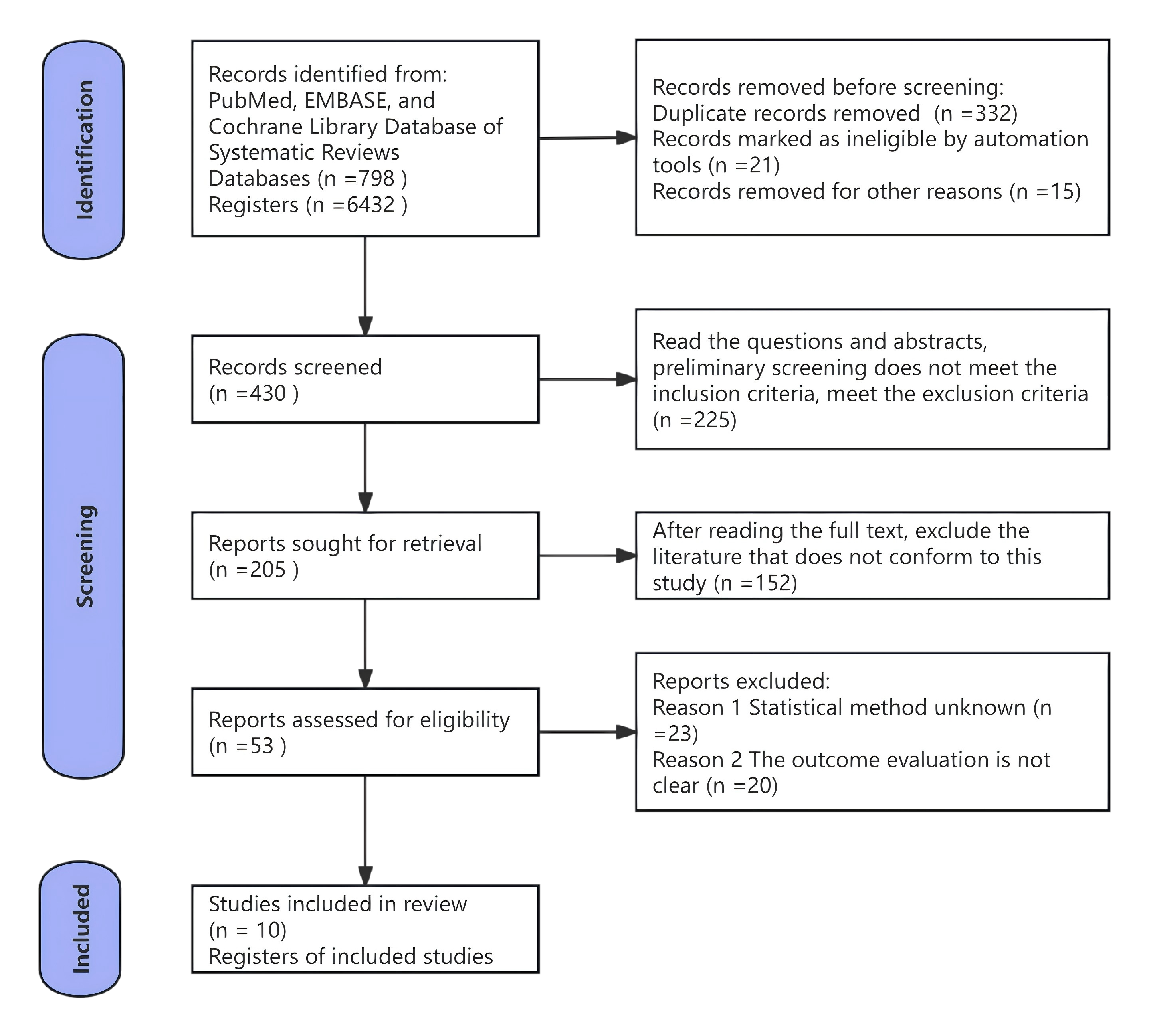
This systematic review and meta-analysis aimed to compare the clinical, radiological, and adjacent-segment outcomes of anterior cervical discectomy and fusion (ACDF) using zero-profile anchored spacers versus conventional cage-and-plate constructs. PubMed, Embase, the Cochrane Library, CNKI, Wanfang, and the Chinese Biomedical Literature Database were searched for relevant studies published between January 2012 and June 2019. Two reviewers independently performed study selection, data extraction, and risk-of-bias assessment, with evidence certainty evaluated using GRADE. Meta-analyses were conducted using Review Manager 5.4. Ten studies involving 690 patients at final follow-up were included, comprising one randomized controlled trial, one prospective study, and eight retrospective studies. Compared with conventional cage-and-plate constructs, zero-profile devices were associated with a lower overall incidence of adjacent segment degeneration (OR = 0.49, 95% CI: 0.30–0.82; P = 0.006), although most subgroup analyses showed no significant differences. Zero-profile devices also demonstrated lower rates of early postoperative dysphagia (OR = 0.44, 95% CI: 0.28–0.67; P = 0.0002), dysphagia at 3 months (OR = 0.14, 95% CI: 0.06–0.38; P < 0.00001), and late postoperative dysphagia (OR = 0.12, 95% CI: 0.03–0.45; P = 0.002). Additionally, zero-profile devices were associated with reduced intraoperative blood loss (MD = −12.64 mL, 95% CI: −24.14 to −1.13; P = 0.03) and shorter operative time (MD = −11.11 min, 95% CI: −17.44 to −4.78; P < 0.00001). No significant differences were observed in Japanese Orthopaedic Association scores (P = 0.83), Neck Disability Index scores (P = 0.40), or postoperative Cobb angle (P = 0.09). Both techniques achieved comparable functional outcomes and postoperative cervical alignment, while zero-profile devices may offer advantages in reducing dysphagia, adjacent segment degeneration, and perioperative morbidity. However, these findings should be interpreted cautiously because of the predominance of retrospective studies and heterogeneity in implant designs. Further high-quality randomized trials with long-term follow-up are warranted.
References
[1]W S G, A R R. (1958). The treatment of certain cervical-spine disorders by anterior removal of the intervertebral disc and interbody fusion. The Journal of bone and joint surgery. American volume, 40-A(3), 607-624.
[2]B C R. (1958). The anterior approach for removal of ruptured cervical disks. Journal of neurosurgery, 15(6), 602-617.
[3]Beril G, M S D, S M G, et al. (2008). Surgical treatment of cervical spondylotic myelopathy with anterior compression: a review of 67 cases. Journal of neurosurgery. Spine, 9(2), 152-157.
[4]Yuanyuan C, Huajing C, Peng C, et al. (2015). Anterior cervical interbody fusion with the Zero-P spacer: mid-term results of two-level fusion. European spine journal: official publication of the European Spine Society, the European Spinal Deformity Society, and the European Section of the Cervical Spine Research Society, 24(8), 1666-1672.
[5]Wang Z. D, Zhou R. F, Yang H. L, et al. (2014). The application of a zero-profile implant in anterior cervical discectomy and fusion. Journal of Clinical Neuroscience, 21(3), 462-466.
[6]Yuanyuan C, Yang L, Huajiang C, et al. (2017). Comparison of Curvature Between the Zero-P Spacer and Traditional Cage and Plate After 3-Level Anterior Cervical Discectomy and Fusion: Mid-term Results. Clinical spine surgery, 30(8), E1111-E1116.
[7]Li Y, Hao D, He B, et al. (2015). The Efficiency of Zero-profile Implant in Anterior Cervical Discectomy Fusion: A Prospective Controlled Long-term Follow-up Study. Journal of Spinal Disorders and Techniques, 28(10), 398-430.
[8]P. H. C, Kartik K, A B J. (2015). Zero-profile Anchored Spacer Reduces Rate of Dysphagia Compared With ACDF With Anterior Plating. Journal of spinal disorders & techniques, 28(5), 284-290.
[9]Liu Y, Wang H, Li X, et al. (2016). Comparison of a zero-profile anchored spacer (ROI-C) and the polyetheretherketone (PEEK) cages with an anterior plate in anterior cervical discectomy and fusion for multilevel cervical spondylotic myelopathy. European Spine Journal, 25(6), 1881-1890.
[10]Lu Y, Bao W, Wang Z, et al. (2018). Comparison of the clinical effects of zero-profile anchored spacer (ROI-C) and conventional cage-plate construct for the treatment of noncontiguous bilevel of cervical degenerative disc disease (CDDD): A minimum 2-year follow-up. Medicine, 97(5), 1-7.
[11]Li Z, Zhao Y, Tang J, et al. (2017). A comparison of a new zero-profile, stand-alone Fidji cervical cage and anterior cervical plate for single and multilevel ACDF: a minimum 2-year follow-up study. European Spine Journal, 26(4), 1129-1139.
[12]Higgins JPT, Thomas J, Chandler J, et al. (Eds.). (2019). Cochrane Handbook for Systematic Reviews of Interventions (2nd ed.). Wiley.
[13]Page MJ, McKenzie JE, Bossuyt PM, et al. (2021). The PRISMA 2020 statement. BMJ, 372, n71.
[14]Hilibrand AS, Robbins M. (2004). Adjacent segment degeneration and adjacent segment disease: the consequences of spinal fusion? Spine J, 4(6 Suppl), 190S-194S.
[15]Sterne JAC, Savović J, Page MJ, et al. (2019). RoB 2: a revised tool for assessing risk of bias in randomised trials. BMJ, 366, l4898.
[16]Sterne JAC, Hernán MA, Reeves BC, et al. (2016). ROBINS-I: a tool for assessing risk of bias in non-randomised studies of interventions. BMJ, 355, i4919.
[17]Guyatt GH, Oxman AD, Vist GE, et al. (2008). GRADE: an emerging consensus on rating quality of evidence. BMJ, 336, 924-926.
[18]Di Z, Duo Z, Baoge L, et al. (2019). Can Self-Locking Cages Offer the Same Clinical Outcomes as Anterior Cage-with-Plate Fixation for 3-Level Anterior Cervical Discectomy and Fusion (ACDF) in Mid-Term Follow-Up? Medical science monitor: international medical journal of experimental and clinical research, 25, 547-557.
[19]Zhou J, Li J, Lin H, et al. (2018). A comparison of a self-locking stand-alone cage and anterior cervical plate for ACDF: Minimum 3-year assessment of radiographic and clinical outcomes. Clinical Neurology and Neurosurgery, 170, 73-78.
Downloads
Published
Issue
Section
License
Copyright (c) 2027 Yanqiang Bai, Hao Chen, Ning Wang

This work is licensed under a Creative Commons Attribution 4.0 International License.