Skip to main content
Skip to main navigation menu
Skip to the current issue
Skip to site footer
Open Menu
International Journal of Advanced AI Applications
International Journal of Advanced AI Applications
Current
Archives
Announcements
SH9 Research
About
About the Journal
Submissions
Editorial Team
Privacy Statement
Contact
Search
Register
Login
Current Issue
Vol. 2 No. 11 (2026): vol 2 issue 11
Published:
2026-10-20
Articles
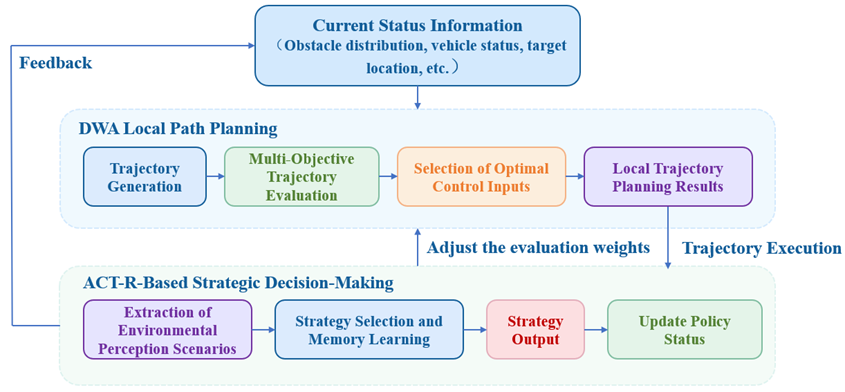
An Adaptive Local Trajectory Planning Method for DWA Based on the ACT-R Cognitive Mechanism
Liwen Wang, Aijuan Li, Máté Zöldy, Xibo Wang, Chuanyan Xu, Yuansheng Cheng
1-23
PDF
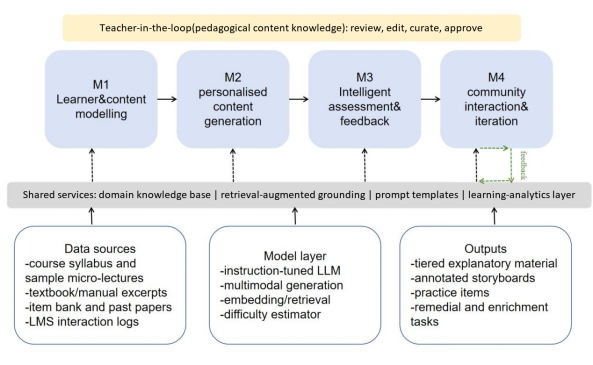
Constructing a Generative AI Framework for Personalised Instructional Resource Development: A Quasi-Experimental Evaluation in a Micro-Lecture Design and Production Course
Guihua Gao, Hanyan Cai, Shiru Zhu
24-48
PDF
Research on Factual Hallucination Detection and Mitigation in Large Language Models Based on Retrieval-Augmented
Zehua Zhou
49-66
PDF
View All Issues
Make a Submission
Make a Submission